
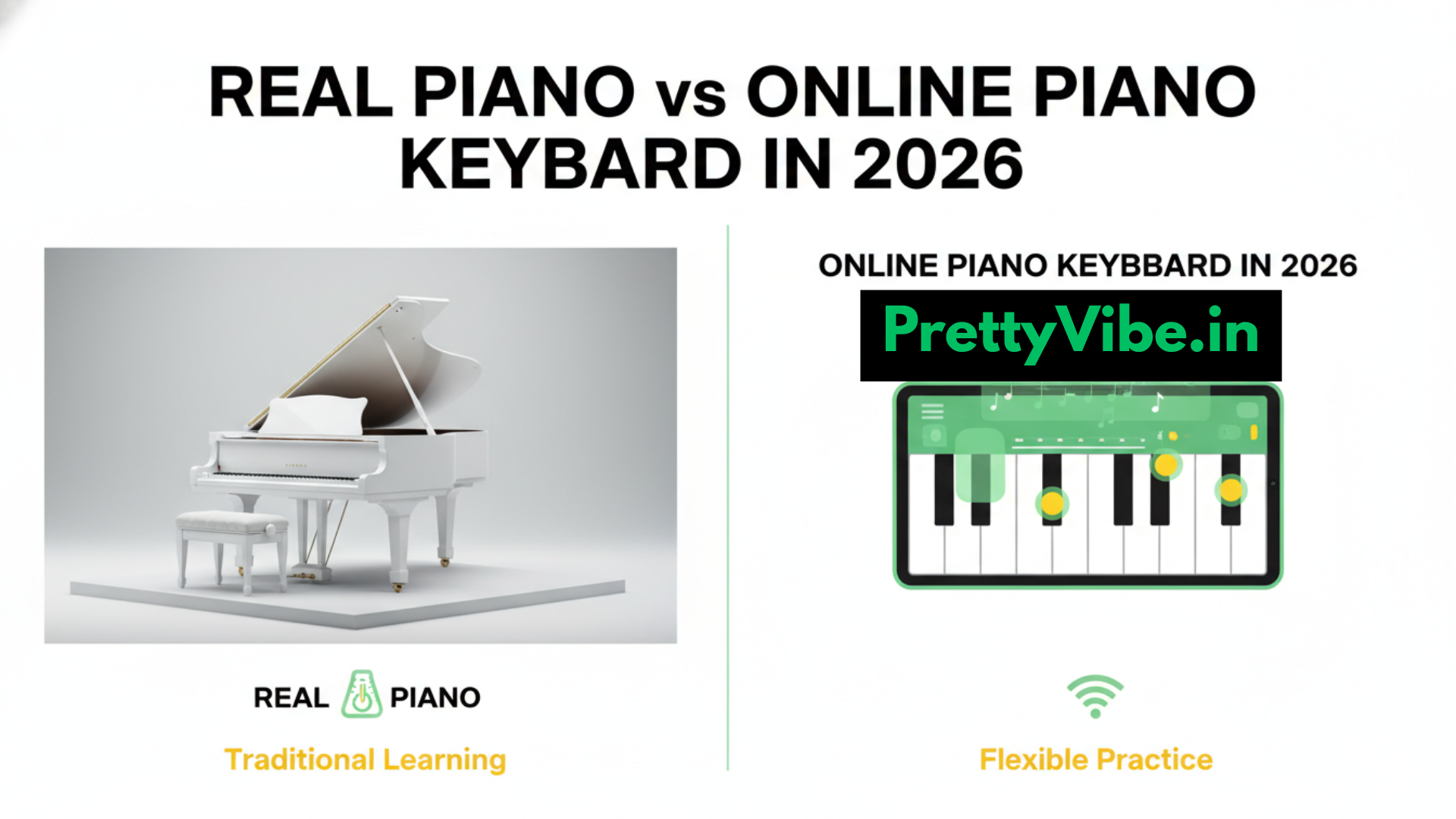
I still remember my first “real” piano lesson. My teacher, a woman whose personality exuded a faint scent of Earl Grey tea and strict discipline, sat me down at a Steinway grand piano that was probably worth more than my first three cars combined. Touching its keys felt like they had a mind of their own. If I pressed them gently, they whispered; if I struck them hard, they roared. But times changed, and years later, in my tiny apartment, that acoustic dream had transformed into a plastic keyboard perched precariously on a wobbly table.
Is one “better” than the other? Honestly, it’s like comparing a fine vintage to a top-of-the-line energy drink. Both get you where you need to go, but the experience is entirely different. So let’s dive into the complex yet beautiful world of Real Piano vs Online Piano Keyboard.
Why Acoustic Pianos Still Reign Supreme
There’s no substitute for the physics of a real piano. When you press a key, a felt hammer strikes copper strings. The entire wooden box resonates. You don’t just hear the sound; you feel it in your chest.
By the way, did you know that an acoustic piano is technically a percussion instrument? It’s essentially a giant, sophisticated drum set made of strings and wood. This “mechanical” design gives you a dynamic range that most digital setups simply can’t replicate.
- Advantages: Incredible touch sensitivity, rich, natural tone, and—let’s be honest—it makes your living room look 10 times classier.
- Disadvantages: It’s very heavy (don’t even try moving it alone, seriously), it’s noisy, and it needs “tuning” twice a year, which is quite expensive.
Why Online Keyboards are a Life-Saver
Now, let’s talk about the “Online Piano Keyboard” or digital setups. If you’re living in a 2026-era apartment with paper-thin walls, a real piano is a one-way ticket to an eviction notice.
Online keyboards and high-end digital pianos are the ultimate “hack.” You get the 88 keys, but you also get a volume knob. connecting a keyboard to your laptop opens up a world of MIDI—suddenly, your piano can sound like a 1970s synth or a full orchestral string section.
Why Digital is Winning the 2026 Game
- Silent Practice: Plug in those headphones and play “Bohemian Rhapsody” at 2 AM. No one will know.
- No Tuning Needed: It uses samples, so it stays perfectly in tune forever.
- Portability: You can literally tuck some of these under your arm and go to a gig.
Which One Should You Actually Buy (Real Piano vs Online Piano Keyboard)
Look, if you’re a purist who wants to master Rachmaninoff, you eventually need the real deal. But for 90% of us? The convenience of digital is just too good to ignore.
If you’re ready to start your journey, here are the two things I personally swear by. I’ve seen these change the game for beginners more than anything else.
1. The Hardware: Roland FP-30X Digital Piano
This is the “Goldilocks” of digital pianos. It has weighted keys, which means it mimics that heavy feel of a real piano. It’s compact, sounds like a million bucks, and has Bluetooth to connect to your phone.
Check out the Roland FP-30X on Amazon see why it’s a top-tier choice for 2026.
2. The Software: Pianote (Online Lessons)
A piano is just a piece of furniture until you know how to play it. Pianote is the most “human” online service I’ve found. They have real teachers you can actually talk to, and the community is super supportive. It’s like having that Earl Grey teacher I mentioned earlier, but way more chill and available 24/7.
You can grab a Free Trial of Pianote hereto start playing actual songs by next week.
FAQs
Q1) Can I learn piano on a cheap 61-key keyboard?
A) You can, but you’ll outgrow it in about three weeks. It’s like trying to learn to drive in a golf cart. You’re better off starting with an 88-key weighted digital piano so your fingers learn the right “weight.”
Q2) Are online piano keyboards actually “real” instruments?
A) In 2026? Absolutely. The tech has gotten so good that even pros use them for recording. If it makes music and helps you express yourself, it’s a real instrument.
Q3) Which is cheaper in the long run?
A) Digital, hands down. An acoustic piano is a “forever” investment that requires constant maintenance (tuning can cost $150+ per visit). A digital piano just needs an outlet.